
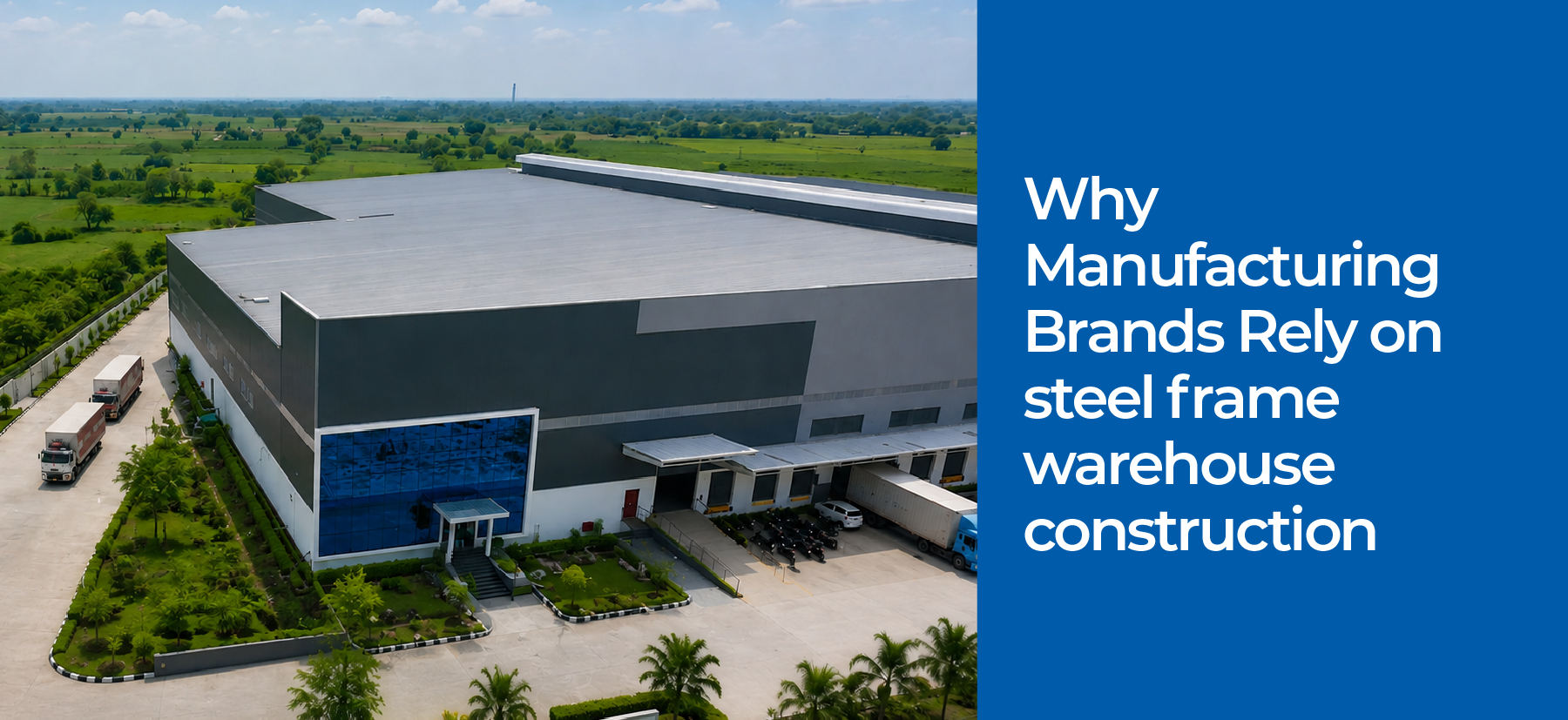
Manufacturing companies need warehouses that can handle daily work without slowing operations. They need space for raw materials, finished goods, machines, packing areas and vehicle movement. This is why steel frame warehouse construction has become a practical choice for many growing manufacturing brands.
Steel structures are strong, flexible and suitable for large industrial spaces. They can also be planned around the way a warehouse actually works. For businesses that want a building that supports present needs and future growth, steel often makes sense.
Top Reasons Manufacturers Prefer Steel Frame Warehouse Construction
1. It Gives More Open Working Space
Manufacturing warehouses usually need large open areas. Too many columns can make movement difficult, especially when forklifts, pallets, machines and loading equipment are used every day.
One reason brands choose steel frame warehouse construction is that it can support wider spans with fewer internal columns. This gives teams more freedom to plan storage racks, production zones, packing areas and vehicle routes.
Open space also makes future changes easier. If the business wants to move equipment or change the floor layout the structure is less likely to get in the way.
2. It Supports Heavy Industrial Loads
Manufacturing warehouses may need to hold heavy goods, large machines, overhead equipment or special storage systems.
With steel frame warehouse construction the structure can be designed according to the expected load. Engineers can plan beams, columns, roof members and connections based on what the building needs to carry.
This helps create a safer working space. It also avoids using a structure that is too weak or much heavier than needed. For industrial brands, that balance matters.
3. Construction Can Be More Organised
Time matters in manufacturing. A delay in warehouse construction can affect storage, production, deliveries and customer orders.
One advantage of steel frame warehouse construction is that many steel parts can be prepared away from the project site. They can be cut, shaped, drilled and checked before being brought for assembly.
This can make site work more organised. Teams know which parts are needed and where they have to go. Good planning is still important but a clear design and installation process can keep work moving smoothly.
4. Future Expansion Is Easier to Plan
Manufacturing brands often grow. A warehouse that feels large today may become too small after a few years.
This is where steel frame warehouse construction can help. The building can be planned with future expansion in mind. Extra bays, storage sections or working areas may be added later if the original design allows it.
That means a company may not need to rebuild everything from scratch when it grows. A good warehouse should solve today’s needs while leaving room for tomorrow.
5. It Works with Different Warehouse Needs
No two manufacturing businesses work in exactly the same way. A food brand, an auto parts company and an engineering unit may all need different layouts.
With steel frame warehouse construction the structure can be planned around needs such as:
Large loading and unloading doors.
High storage racks.
Crane systems.
Ventilation areas.
Office sections.
Packing zones.
Mezzanine floors.
Separate material storage areas.
This flexibility helps businesses create a warehouse that supports daily work instead of forcing teams to work around a poor layout.
6. Maintenance Can Be Simple
Every industrial building needs maintenance. Roof sheets, fasteners, drainage systems, coatings and joints should be checked from time to time.
A properly planned steel frame warehouse construction project can make these tasks easier by including clear access points and simple structural layouts.
Steel can also be protected with suitable coatings to reduce rust and weather damage. The right protection depends on the location and working conditions. Regular checks still matter because small issues are easier to fix before they become expensive.
7. It Makes Better Use of Height
Warehouse space is not only about floor area. Height can be just as useful, especially where land is limited.
With steel frame warehouse construction, businesses can plan taller clear heights for storage racks, equipment or future mezzanine levels.
This can help companies store more goods without immediately needing a larger site. It can also give teams more room to organise materials and equipment properly.
8. It Suits Long Term Industrial Use
A manufacturing warehouse is usually built for many years. The structure has to deal with regular movement, changing loads, weather, repairs and business growth.
Steel structures are useful because they offer both strength and flexibility. A well planned warehouse can support new machines, different storage systems or layout changes as the business develops.
In simple words the building can grow with the company instead of becoming a problem later.
What Manufacturing Brands Should Consider Before Building
Before starting a warehouse project, businesses should look at more than just building size.
Important points include:
The type and weight of stored goods.
The number of loading points required.
Forklift and vehicle movement.
Storage rack height.
Fire and safety needs.
Drainage and ventilation.
Future expansion plans.
Maintenance access.
Local weather conditions.
Thinking about these points early can reduce changes during construction and make the final warehouse easier to use.
Conclusion
A good warehouse should be strong, easy to use and ready for future growth. It should give enough space for storage, machines, workers and daily movement.
Good planning can also make maintenance easier and help the business avoid problems later.
If you are planning a prefabricated warehouse, choosing the right building system is very important.
Willus Infrastructure helps industrial and manufacturing businesses build practical warehouse spaces that are made for daily work, safety and long term use.