
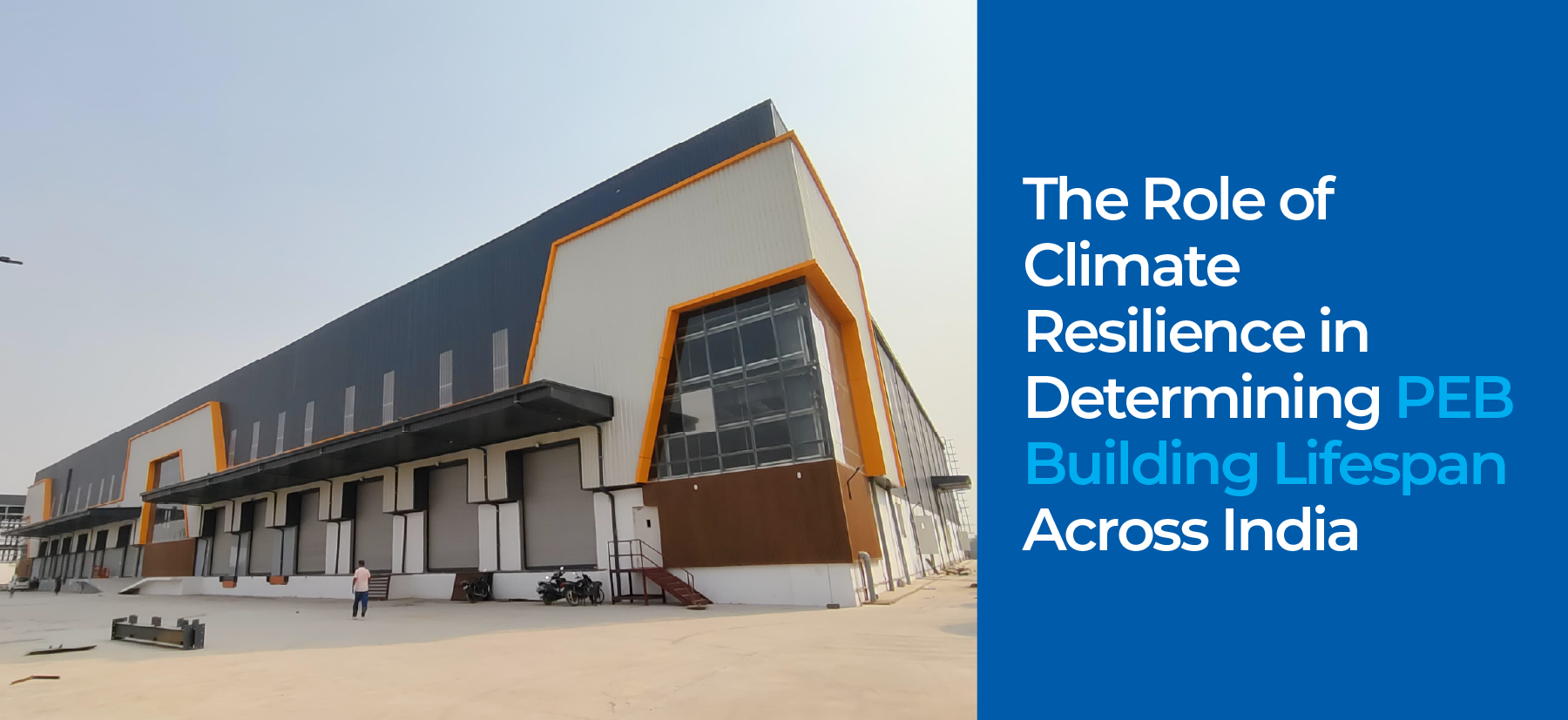
India has many weather conditions. Some places are very hot. Some have heavy rains. Other areas are near the sea and have salty air. In the north there is winter with cold and fog. Buildings in different parts of the country face different weather. Because of this, buildings must be made in a way that they can stay strong for many years. This is called climate resilience.
When buildings are made using proper materials and good design they last longer. The PEB Building Lifespan depends a lot on how well the building can handle the weather of that place. If the building is not made to face heat, rain, wind or salt, it will get weak very fast. That is why climate matters in construction.
How Climate Affects the PEB Building Lifespan in India?
India’s Climate Zones and Their Impact on PEB Buildings
India is a large country with different types of weather. In the west and north west, places like Rajasthan are very dry and hot. In the east and north east there is a lot of rain. The coastal areas like Chennai or Mumbai have salt in the air. The north has cold weather, snow and fog in winter.
All these weather types affect buildings. Heat makes metal expand. Rain brings water damage. Salt in the air can cause rust. Cold weather makes joints weak. The PEB Building Lifespan will not be the same in all places. Buildings in each climate zone need different protection methods to stay strong for many years.
Why Climate Resilient Construction Is Important
Climate resilient construction means building in a way that protects the structure from local weather. If the design does not match the climate the building gets damaged quickly. Water may leak in. Steel may start rusting. Paint may peel off. Strong winds may shake the structure.
But if the building is designed carefully, it can handle all these problems. The PEB Building Lifespan becomes longer, safer and more cost effective. Climate resilience also means lower maintenance. You do not need to fix or repaint the structure often. So, it saves time, energy and money for many years.
Use of High Quality Steel and Proper Coating
PEB buildings are made from steel. Steel is strong but it needs protection. In areas with high rain or salty air, steel can rust easily. That is why good quality steel must be used. Also the steel must be coated with special paints or chemicals that stop rust.
For example:
- Zinc coating protects from rust.
- Epoxy paint prevents water from damaging the surface.
- Heat resistant paint keeps the building cooler in summer.
These simple materials can greatly improve the PEB Building Lifespan. If poor quality steel or no coating is used the building will not last long. Rust will slowly eat the metal and make the building unsafe.
Design That Matches Local Weather Conditions
A building should not be designed in the same way for every city. The weather in each city is different. In rainy places like Kerala or Assam, roofs must be sloped so water flows away. In hot areas like Delhi or Nagpur, buildings need good airflow and ventilation to remove heat. In windy places, extra support must be added to make the structure strong.
These design changes are very small but very important. When buildings are designed correctly they remain safe and useful for a longer time. This helps increase the PEB Building Lifespan without needing too many repairs later.
Benefits of Factory Made Components
Pre engineered buildings are made in factories. All parts like frames, roofs and beams are made with machines. These machines cut, weld and drill very carefully. This gives more accuracy and better strength. The parts are then moved to the site and assembled like a puzzle.
When parts are made in a clean and controlled environment they are not affected by dust, moisture or mistakes. This helps improve the final quality of the structure. Factory made parts are more reliable and support a longer PEB Building Lifespan than on site construction.
Regular Maintenance Extends Building Life
Every building needs care after it is built. Small problems, like loose bolts or tiny cracks, must be fixed quickly. If ignored these small problems turn into big damage. So, regular checking and small repairs are important.
Climate resilient buildings are easier to maintain. They do not get damaged often. They stay clean and strong with little work. Regular cleaning, painting and bolt tightening are enough to keep the building safe. This helps protect the PEB Building Lifespan and reduce repair costs in the future.
Handling Heavy Rains, Heatwaves and Winds
Extreme weather is becoming common in India. Some places get sudden floods. Some face strong storms. Others face long heatwaves. These conditions can damage buildings if they are not strong.
PEB buildings must be ready for such events. They should have strong foundations, proper drainage and bracing systems. Roofs must be fixed tightly. All joints must be sealed. If these things are done the PEB Building Lifespan will not be reduced by these events. The building will remain safe even when the weather gets worse.
Conclusion
Climate matters in every construction project. It decides how long a building will last. If the building is made without thinking about local weather, it will become weak. But if it is made with the right materials, smart design and regular care, it can last for many years.
The PEB Building Lifespan depends on planning, steel quality, coating, design and climate resilience. These things must be checked before starting a project. A well planned PEB building saves money and stays useful for a very long time.