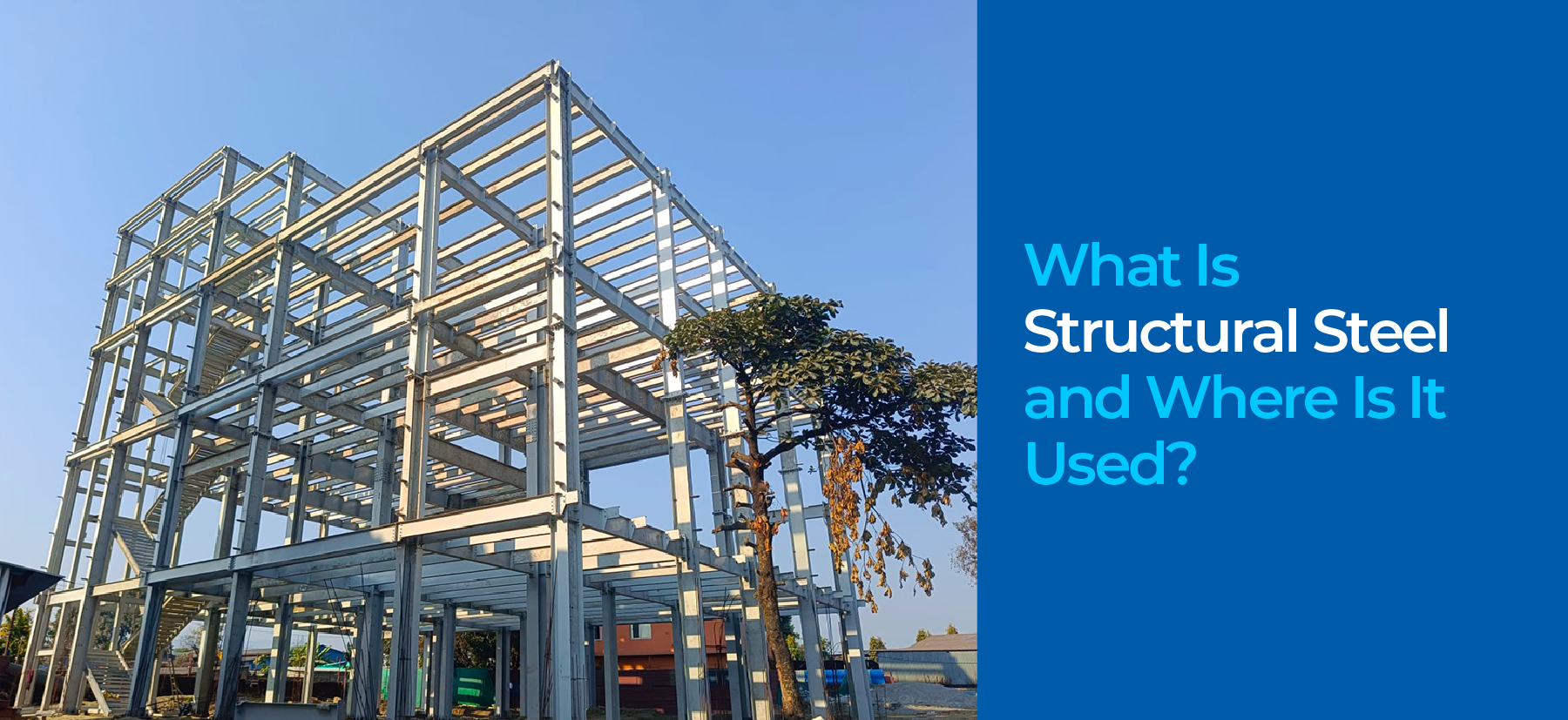
Steel is everywhere around us. It is used in factories, warehouses, bridges, commercial buildings, industrial sheds and many other structures. One of the main reasons is simple: steel is strong, flexible and suitable for large buildings.
Structural steel construction uses specially designed steel parts to create the main frame of a building or structure. Different structural steel types are chosen depending on the load, building size, design and purpose of the project.
So, what exactly is structural steel and where is it commonly used? Let us break it down in simple terms.
What Is Structural Steel?
Structural steel is steel made in specific shapes and sizes for construction work. It is mainly used to carry loads and give strength to buildings.
Beams, columns, channels, angles and plates are some common examples.
In structural steel construction these parts are designed and connected to create a strong frame. The exact structural steel types used in a project depend on what the building needs to support.
A small industrial shed and a large factory, for example, may need very different steel sections.
Why Is Structural Steel So Popular?
There is a reason steel is widely used in industrial projects.
It can support large loads without requiring very thick walls or heavy sections everywhere. Steel components can also be manufactured away from the site and then brought in for assembly.
This can make structural steel construction practical for projects where speed and large open spaces matter.
Different structural steel types can also be combined to suit particular areas of a building. In simple words, engineers do not have to use the same section everywhere.
Common Shapes of Structural Steel
Structural steel comes in many shapes because each part of a building performs a different job.
Some common structural steel types include I beams, H beams, channels, angles, hollow sections and steel plates.
Each one has its own purpose. Beams may carry horizontal loads, while columns mainly support vertical loads. Angles and channels can be used for connections, bracing and secondary framing.
In structural steel construction, choosing the right shape helps the structure handle loads safely without using more material than required.
Structural Steel in Factories
Factories often need wide spaces for machinery, production lines, cranes and material movement.
This is where structural steel construction becomes especially useful. Steel frames can create large spans with fewer internal columns, giving businesses more freedom to plan the factory floor.
The structure can also be designed around crane loads, equipment areas, mezzanine floors and future expansion.
For an industrial business, this flexibility can make everyday operations much easier.
Structural Steel in Warehouses
Warehouses need open floor space and enough height for racks, goods and material handling equipment.
Different structural steel types can be used for the main frame, roof support, bracing and other parts of the building.
Steel construction also makes it easier to plan wide loading areas and large doors for trucks.
This is one reason warehouses and logistics buildings often use steel based structures.
Structural Steel in Commercial Buildings
Steel is not limited to factories.
Commercial buildings, shopping centres, offices and large public spaces may also use structural steel construction.
Steel can support larger open areas while giving architects more freedom with the building layout. It can also work well where future changes or additional floors may need to be considered during the design stage.
Of course, every project still needs proper engineering before any final decision is made.
Structural Steel in Bridges
Bridges need materials that can handle heavy loads, movement, weather and long spans.
Certain structural steel types are commonly used in bridge beams, trusses, support systems and other important parts.
The strength of steel makes it suitable for this kind of work.
At the same time, structural steel construction allows large components to be fabricated with controlled dimensions before they are installed at the project site.
Structural Steel in Pre Engineered Buildings
Pre engineered buildings, often called PEBs, are another major area where steel is used.
The building is designed according to its size, use, loads and site conditions. Steel parts are then fabricated before being taken to the site for erection.
Different structural steel types can be used for primary frames, secondary framing, bracing and other building elements.
Because much of the work is planned and fabricated before site assembly, structural steel construction can support faster and more organised project execution.
How Is the Right Structural Steel Chosen?
The answer depends on the project.
Engineers need to understand the size of the building, expected loads, wind conditions, equipment weight, roof system, crane requirements and many other factors.
When choosing between structural steel types they may consider:
- The load the section needs to carry.
- The span between supports.
- Building height and width.
- Local weather conditions.
- Crane and equipment loads.
- Connection requirements.
- Future expansion plans.
The cheapest section is not always the right one. Safety, performance and long term use matter much more.
Why Design and Fabrication Is Important in Construction?
Good steel alone cannot guarantee a good building.
The design needs to be correct the fabrication has to match the drawings and installation must follow the approved plan.
In structural steel construction, even small mistakes in measurements, connections or alignment can create bigger problems later.
The selected structural steel types should also work together as one complete system rather than being treated as separate parts.
This is why experienced engineering, fabrication and site coordination matter from start to finish.
What Should Businesses Consider Before Starting?
Before planning a steel building, businesses should clearly understand what the structure will be used for.
Think about machines, storage, worker movement, vehicles, cranes, ventilation, future expansion and the expected life of the building.
The more information available at the design stage the easier it becomes to create a practical structure.
A little extra planning at the beginning can save a lot of changes later.
Conclusion
Structural steel plays an important role in modern industrial and commercial construction. It is used in factories, warehouses, bridges, commercial buildings and pre engineered structures because it can provide strength, large spans and design flexibility.
The right steel solution should always be based on actual project needs, loads, site conditions and future plans. Businesses looking for a reliable steel structure manufacturer can work with Willus Infrastructure for design, engineering, fabrication and execution support based on the specific requirements of the project.