
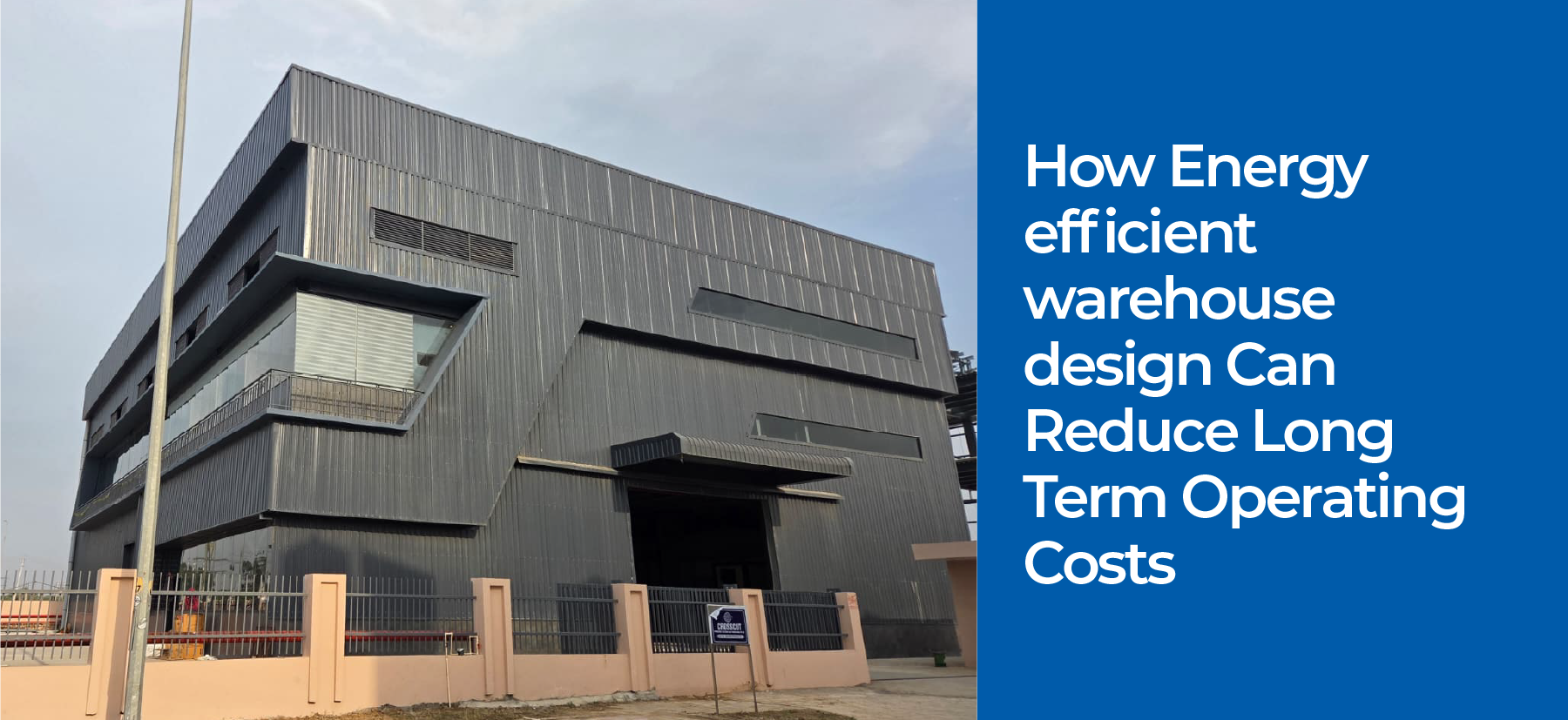
Running a warehouse costs money every day. Businesses have to pay for lighting, cooling, ventilation, machines, repairs and other systems. These costs may look small at first but they can become very high over several years.
This is why Energy efficient warehouse design is important for modern industrial buildings. It helps a warehouse use less power while still staying comfortable and practical. Good planning at the construction stage can also reduce future repair and maintenance costs.
Let us look at some simple ways an efficient warehouse can save money over the long term.
7 Ways Energy efficient warehouse design Reduces Warehouse Running Costs
1. Reduce Lighting Costs With Natural Light
Warehouses often need lights for many hours every day. This can increase electricity bills, especially in large buildings.
With Energy efficient warehouse design, natural light can be used wherever possible. Roof lights, windows and wall openings can allow more daylight to enter the warehouse.
Businesses can also use:
LED lights that use less electricity.
Motion sensors that turn lights off in empty areas.
Separate lighting controls for different warehouse sections.
Timers to avoid keeping lights on when they are not needed.
These small changes can help reduce electricity use without making the warehouse too dark.
2. Control Indoor Temperature Better
Large warehouses can become very hot during summer. They may also lose heat quickly during colder months.
Energy efficient warehouse design can use good insulation in walls and roofs. Insulation helps control the indoor temperature by reducing heat movement.
A well insulated warehouse may need less cooling or heating. This means air conditioners, fans and other systems do not have to work as hard.
It can also make the working area more comfortable for employees.
3. Improve Natural Ventilation
Fresh air is important in many industrial buildings. Poor airflow can make a warehouse feel hot and uncomfortable.
Energy efficient warehouse design can include natural ventilation wherever it suits the building. Roof vents, wall vents and planned openings can help hot air move out and fresh air come in.
Better airflow can reduce the need to use powered ventilation systems all day.
Natural ventilation can also work well in storage areas where full air conditioning may not be needed.
4. Plan the Building Direction Carefully
The direction of a building can affect how much heat enters during the day.
With Energy efficient warehouse design, the building can be planned in a way that makes better use of sunlight and natural airflow.
For example, designers can decide where to place windows, loading areas, doors and office sections based on the sun and wind direction.
A few smart choices during the planning stage may help reduce cooling and lighting needs later.
5. Use Energy Saving Equipment
Warehouse equipment can consume a lot of electricity. Motors, fans, pumps, lights and cooling systems may run for many hours.
Energy efficient warehouse design also considers which systems and equipment should be used inside the building.
Some helpful options include:
Energy saving motors and fans.
LED lighting systems.
Automatic controls and timers.
Smart meters to track power use.
Sensors that turn equipment off when it is not required.
Efficient cooling and ventilation systems.
Using the right equipment can reduce wasted power and help control monthly bills.
6. Lower Maintenance Costs
Energy savings are not only about electricity. Maintenance also has a big effect on long term costs.
When systems work too hard, they may need repairs more often. Proper ventilation, insulation and building planning can reduce pressure on equipment.
This is another advantage of Energy efficient warehouse design. When systems are planned properly, they may work more smoothly and last longer.
Fewer repairs can also mean less downtime and fewer interruptions to daily warehouse work.
7. Make Future Upgrades Easier
Warehouses may need new technology as the business grows. Solar panels, electric vehicle charging points, smart meters and better machines may be added later.
Planning for these needs during construction can make future upgrades simpler.
For example, a warehouse can be built with enough roof strength for solar panels. Space can also be kept for electrical systems, new equipment or charging areas.
A future ready building can save businesses from making large structural changes later.
Which Features Can Help Reduce Costs?
Different building features can reduce different types of operating costs.
Feature | How It Can Help |
Natural daylight | Reduces the need for artificial lighting during the day. |
Roof insulation | Helps control indoor temperature. |
LED lighting | Uses less electricity than many traditional lights. |
Natural ventilation | Can reduce the use of powered fans and cooling systems. |
Smart sensors | Switch off lights or equipment when not needed. |
Solar ready roofing | Makes future solar installation easier. |
Energy monitoring | Helps find areas where electricity is being wasted. |
The right features depend on the warehouse size, location, working hours and type of business.
Why Long Term Planning Is Important
The lowest construction price does not always mean the lowest total cost.
A warehouse may operate for many years. During that time, the business will continue paying for electricity, repairs, cooling, lighting and maintenance.
Good Energy efficient warehouse design looks beyond the first construction cost. It considers how much the building may cost to operate in the future.
Better planning can help a business:
Reduce unnecessary electricity use.
Lower cooling and lighting costs.
Reduce pressure on machines and building systems.
Avoid frequent repairs.
Prepare the warehouse for future technology.
Create a more comfortable working environment.
Spending wisely during the planning stage can help save money year after year.
Conclusion
A warehouse should not only provide enough space. It should also be simple and affordable to operate.
Natural light, proper insulation, better airflow, energy saving equipment, smart controls and future ready planning can all help reduce daily expenses.
A well planned Energy efficient warehouse design can support lower operating costs while making the building more practical for long term business use.
When choosing experienced warehouse manufacturers for an industrial project, Willus Infrastructure can help businesses plan structures around space, performance and long term needs.
Thinking about future energy and maintenance costs from the beginning can help create a warehouse that continues to deliver value for many years.