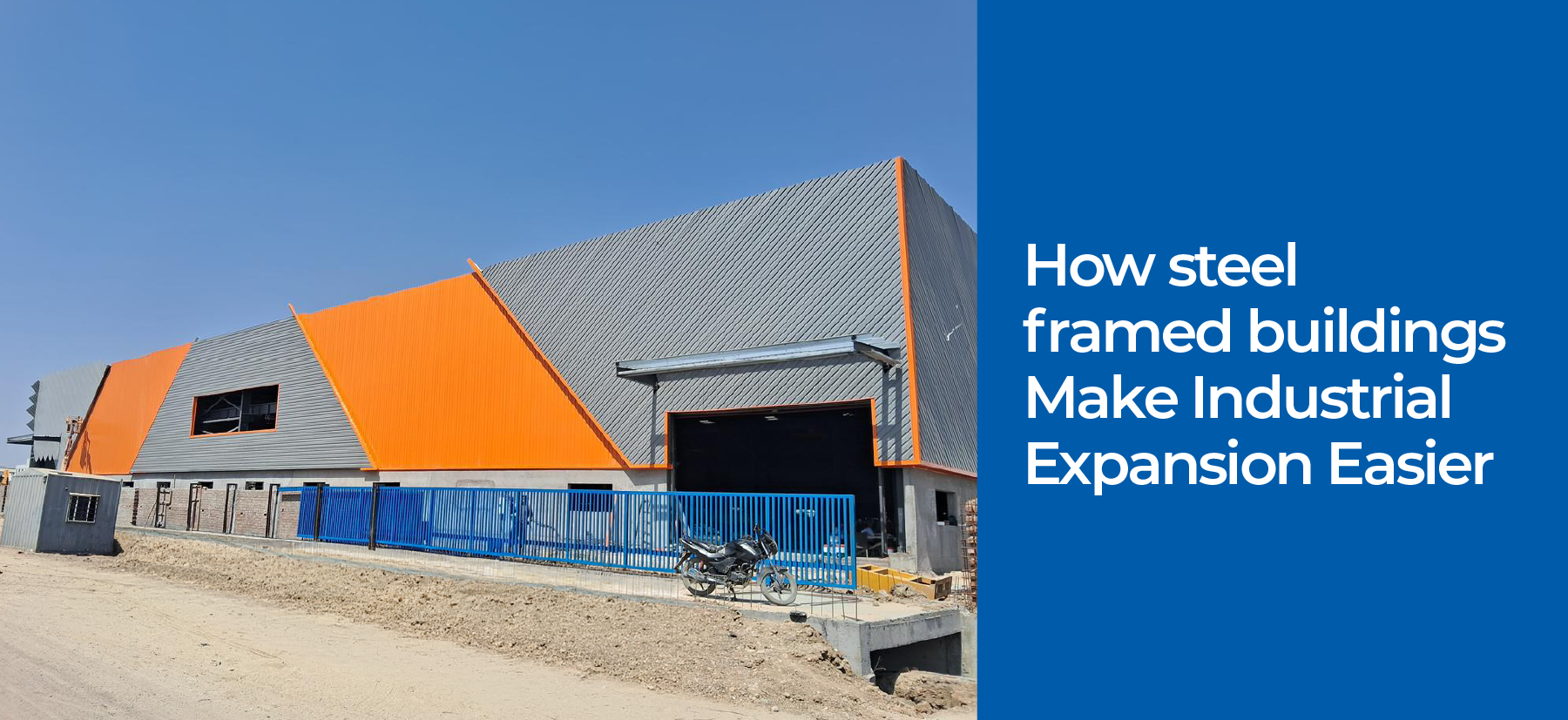
Business growth is a good sign but it often brings one big problem: space. A factory may need another production line, a warehouse may need more storage or a company may want a larger loading area. Expanding a traditional building can take time and disturb daily work.
This is where steel framed buildings can be useful. Their strong structure can be planned for future changes. They support open spaces, faster construction and easier additions. For growing industrial businesses, this can make expansion much simpler.
How steel framed buildings Support Faster Industrial Growth
1. They Allow Easier Building Extensions
One major benefit of steel framed buildings is that future extensions can often be planned from the beginning. A company may start with the space it needs today and add more sections later.
For example, extra bays can be added for storage, production, dispatch or machinery. This can be easier than changing a building that was never designed for expansion. Planning ahead also helps businesses avoid building too much space before they need it.
2. They Support Faster Construction
Industrial expansion often needs to happen quickly. Long construction periods can affect production, deliveries and staff movement.
With steel framed buildings, many structural parts can be prepared before they reach the site. Once the foundation is ready the steel components can be assembled in a planned order.
This can help reduce construction time compared with some traditional methods. Faster work may also mean that the new space becomes useful sooner. This makes steel framed buildings practical for businesses that cannot afford long delays.
3. They Create Large Open Spaces
Factories and warehouses often need wide areas with fewer columns in the middle. Large open spaces make it easier to place machines, racks, vehicles and workstations.
Steel framed buildings can be designed with wide spans, which helps create flexible floor areas. This gives businesses more freedom when planning their layout.
If the company changes its production process later the internal arrangement can also be adjusted. Machines can move, storage racks can be added and work zones can be changed more easily.
4. They Can Adapt to Changing Business Needs
Industrial needs rarely stay the same forever. A warehouse may later need office space. A factory may add a new line. A distribution centre may need more loading points.
Steel framed buildings can support this kind of change because the structure can be planned with flexibility in mind. Depending on the project, businesses may be able to add new bays, create mezzanine levels or adjust internal areas.
Instead of moving to a completely new site the business may be able to improve the space it already has.
5. They Help Reduce Disruption During Expansion
Construction inside an active industrial site can be difficult. Workers, trucks, machines and materials may already be moving around the area every day.
A well planned expansion using steel framed buildings can help reduce unnecessary disruption. Since many parts are manufactured before arriving at the site, on site work can be more organised.
The expansion can also be planned in stages. One section may be completed while other areas continue operating. This can help the business keep working during construction.
6. They Support Different Industrial Uses
Steel framed buildings are useful because the same structural approach can support many types of industrial spaces. They can be planned for:
-
Warehouses and storage facilities.
-
Manufacturing units.
-
Workshops.
-
Distribution centres.
-
Loading and dispatch areas.
-
Industrial sheds.
-
Office sections inside larger facilities.
-
Spaces for machinery and equipment.
This flexibility can help companies whose operations may change or grow over time.
7. They Can Make Future Planning Simpler
Industrial expansion becomes easier when future needs are considered during the first design stage. Businesses can think about where a new bay may be added, where loading zones may extend and how utilities will reach future sections.
Even if expansion does not happen for several years, having a clear plan can avoid difficult changes later.
Designers can also think about roof height, column spacing, doors, ventilation, drainage and movement of large vehicles. These details can have a big effect when the business is ready to grow.
What Should Businesses Plan Before Expanding?
Before starting an industrial expansion, it helps to look at the whole site rather than only the new building area.
Important points include:
-
How much extra floor space is needed.
-
Where future machinery or storage will be placed.
-
How trucks and workers will move through the site.
-
Whether more loading space is required.
-
How power, water, ventilation and drainage will be extended.
-
Whether another expansion may be needed later.
-
How construction can happen with minimum disturbance.
Good planning helps businesses avoid costly changes later and makes future growth much easier to manage.
Conclusion
Industrial growth should not always mean leaving an existing facility and starting again somewhere else. A flexible structure can make it easier to add storage, production space, loading areas, offices or other useful sections. When expansion is considered from the start, steel framed buildings can give businesses a practical way to grow while making better use of their current site.
If your business is looking at prefab steel buildings in Delhi NCR for future ready industrial projects, Willus Infrastructure can help plan structures around present needs as well as possible expansion. A building designed with growth in mind can save time, reduce disruption and make future changes easier to manage.