
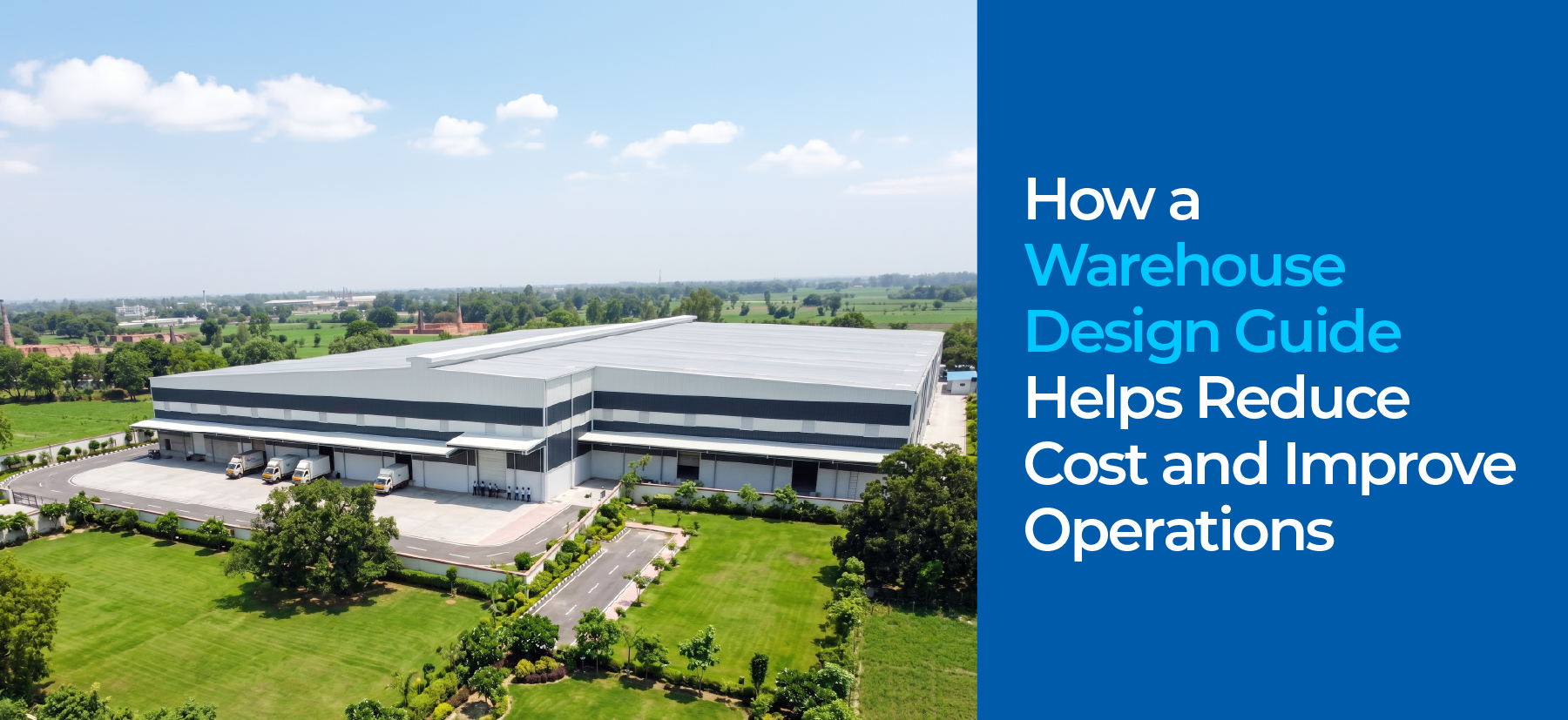
A warehouse is an important part of any business that stores, packs or moves goods. It may look like a simple large building but it needs proper planning. If the warehouse is not designed well, daily work can become slow and costly.
Workers may waste time. Goods may get damaged. Trucks may wait for too long. Small problems can turn into big expenses.
This is why a Warehouse Design Guide is very helpful. It helps businesses plan the space before construction starts.
It shows how the warehouse should be arranged, where goods should be kept and how workers and machines should move. When the design is clear, work becomes smoother and cost becomes easier to control.
Why a Warehouse Design Guide Matters for Better Space and Lower Cost
1. Helps Use Space in a Better Way
Space is one of the most important things in a warehouse. If the space is not planned properly, even a big warehouse can feel small. Goods may be kept in the wrong place. Walking paths may become blocked. Loading areas may become crowded.
A Warehouse Design Guide helps plan every part of the space. It helps decide where racks, storage areas, office space, loading bays and movement paths should be placed. This makes the warehouse easier to use.
Good space planning helps in many ways:
-
It keeps goods in the right place.
-
It gives workers enough space to move.
-
It keeps machines and forklifts moving safely.
-
It reduces empty and wasted corners.
-
It makes the warehouse look clean and organised.
When space is used well the whole warehouse works better.
2. Reduces Extra Walking and Movement
In many warehouses, workers walk more than needed. They may go from one corner to another again and again. Sometimes fast moving goods are kept far from the packing area. Sometimes storage areas are not placed in the right order.
This wastes time every day. It also makes workers tired.
A Warehouse Design Guide helps reduce this problem. It helps create a simple flow. Goods can come in, get stored, picked, packed and sent out without confusion. When everything is placed in the right order, workers spend less time walking and more time doing useful work.
This improves daily speed and reduces labour cost.
3. Helps Save Construction Cost
Building a warehouse without proper planning can become expensive later. If the height is wrong, storage may become difficult. If the floor is weak, heavy goods may create problems. If entry and exit points are not planned well, truck movement can become slow.
A Warehouse Design Guide helps avoid these mistakes. It gives a clear plan before construction starts. It helps decide the right height, floor strength, door size, ventilation, lighting and loading area.
When everything is planned early there are fewer changes during construction. This saves money and also saves time.
4. Improves Storage Capacity
The main purpose of a warehouse is storage. But storage does not only mean keeping more goods. It means keeping goods in a smart and safe way.
If goods are placed without planning the warehouse can become messy. Workers may take more time to find items. Products may get damaged. Some areas may become overfilled, while other areas stay unused.
A good design helps solve this issue. It helps decide the right place for racks, pallets, shelves and open storage. It also helps keep fast moving goods near the packing or dispatch area.
With better storage planning the same warehouse can hold more goods without looking crowded.
5. Makes Loading and Unloading Faster
Loading and unloading are daily jobs in many warehouses. If this area is not planned well, trucks may wait for a long time. Workers may face trouble while moving goods. This can delay deliveries.
A Warehouse Design Guide helps plan loading bays and truck movement areas properly. It helps make sure that goods can enter and leave the warehouse smoothly.
When loading and unloading are fast the business saves time. Trucks can move quickly. Workers can finish their tasks faster. Customers can also get their goods on time.
6. Improves Worker Safety
Safety is very important in a warehouse. A poorly planned warehouse can increase the chance of accidents. Goods may fall. Workers may slip or trip. Forklifts may not get enough turning space. Emergency exits may get blocked.
A Warehouse Design Guide helps create safer work areas. It helps plan clear walking paths, proper lighting, safe storage zones and emergency routes. It also helps keep machines and workers in separate movement areas where needed.
When the workplace is safe, workers feel more comfortable. Accidents reduce and work continues without sudden problems.
7. Supports Smooth Daily Work
A warehouse works well when every task is connected properly. Goods should enter the warehouse, move to storage, go to packing and then move out for delivery in a simple way. If this flow is not clear, work slows down.
A Warehouse Design Guide helps create this smooth work flow. It helps place each area in the right order. This reduces confusion and saves time.
A better work flow also helps managers. They can see where goods are, how workers are moving and where delays are happening. This makes daily operations easier to control.
8. Helps With Future Growth
A business may start with a small need but it can grow with time. More orders may come. More goods may need storage. More workers and machines may be added.
If the warehouse is not planned for the future, growth can become difficult. The business may need costly changes later.
A Warehouse Design Guide helps keep future needs in mind. It allows space for extra racks, new machines, more loading areas or better movement paths. This makes the warehouse useful for a longer time.
9. Saves Money in the Long Run
A well designed warehouse saves money every day. It reduces wasted space, extra walking, product damage, delays and repair work. It also helps workers complete tasks faster.
A poor design may look simple in the beginning but it can create many hidden costs later. This is why proper planning is always a smart choice.
Conclusion
A Warehouse Design Guide helps businesses build a warehouse that is safe, useful and easy to manage.
It improves space use, storage, loading, worker safety and daily work speed. It also helps reduce cost and supports future growth.
If you are looking for strong industrial planning and reliable warehouse solutions, Willus Infrastructure can support the project as a trusted warehouse manufacturer with practical design knowledge and can be a great choice.