
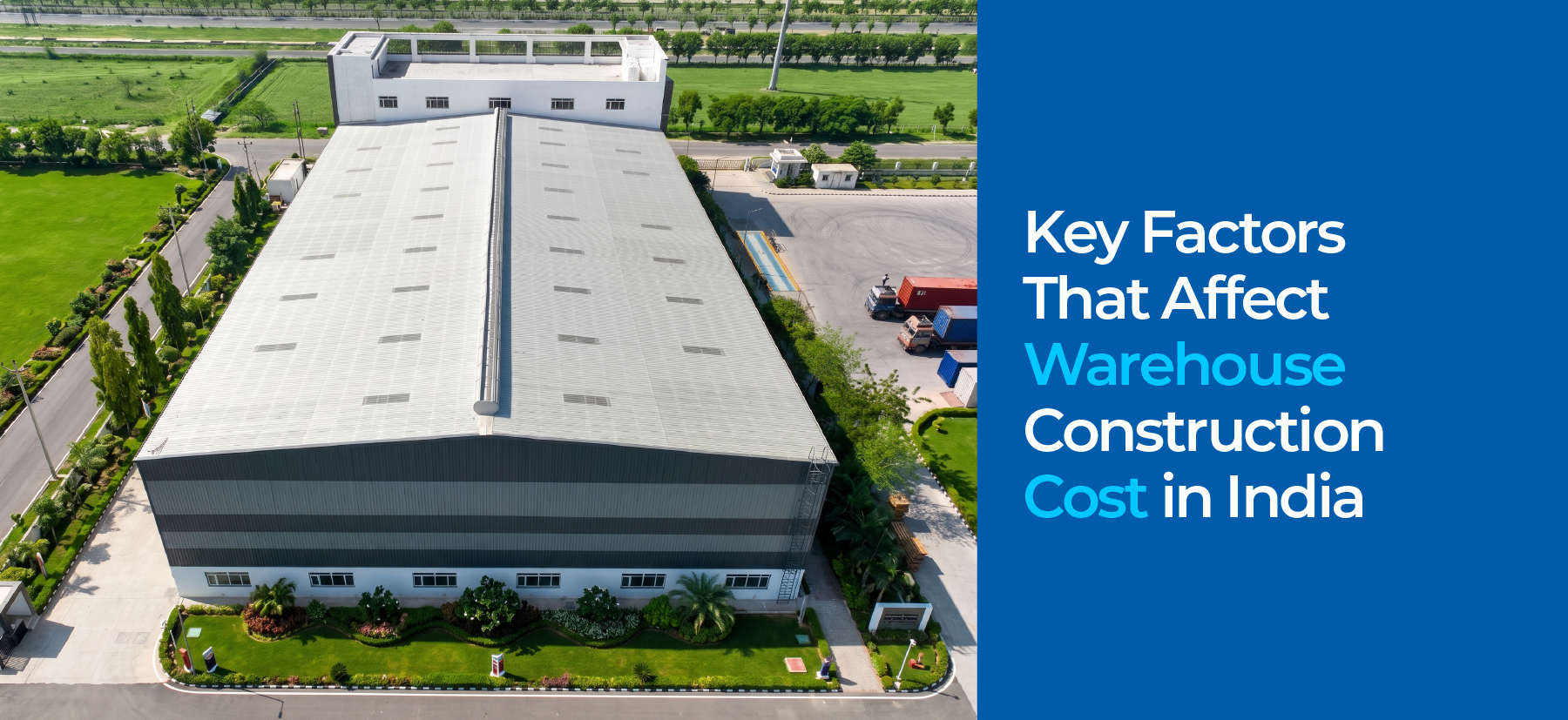
Building a warehouse is a major investment and the final budget can change from one project to another.
A simple storage shed may cost less, while a temperature controlled facility may need a much larger budget.
Understanding the main factors behind warehouse construction cost helps business owners plan better, avoid surprise expenses and choose the right design from the beginning.
Careful budgeting also helps businesses compare materials, control unnecessary spending, prepare for future growth and make practical decisions before construction work starts at the chosen site.
What Are the Main Factors Affecting Warehouse Construction Cost in India?
Size and Total Built Up Area
The size of the warehouse is one of the biggest cost factors. A larger building needs more steel, roofing, flooring, labour and foundation work. However the cost per square foot may sometimes become lower when the project size increases because materials can be purchased in bulk.
The height of the building also matters. A taller warehouse may need stronger columns, more steel, extra safety planning and special equipment. Businesses should decide how much storage space they actually need instead of choosing the biggest possible design.
Location and Site Conditions
The project location can make a major difference to warehouse construction cost. Land conditions, road access, local labour charges and the distance from material suppliers all affect the final budget.
A flat and stable site is usually easier to build on. Soft soil, uneven land, poor drainage or a high water table may require additional work. Soil testing can show whether the foundation needs to be deeper or stronger. Transport costs may also rise when the site is far from major roads or steel suppliers.
Type of Structure and Building Design
The chosen construction system plays an important role in the total expense. Pre engineered steel buildings are often preferred because many parts are made in a factory and assembled at the site. This can reduce construction time and improve accuracy.
Still, warehouse construction cost depends on the design itself. Wide spans, heavy cranes, multiple floors, large doors, loading areas or complex roof shapes may need more material and engineering work. A simple, practical design is often easier to build and maintain.
Quality and Type of Materials
Material quality has a direct effect on strength, safety and long term performance. Steel grade, roofing sheets, wall panels, insulation, fasteners, paint and flooring materials all come in different quality levels.
Choosing the cheapest option may lower the starting cost but it can lead to more repairs later. Poor roofing may cause leaks, while weak flooring may crack under heavy loads. The warehouse construction cost should be planned with the building’s daily use in mind. A unit holding heavy machines needs stronger materials than a light storage space.
Foundation and Flooring Requirements
The foundation supports the complete structure, so it cannot be treated as an afterthought. Its design depends on the soil condition, building weight, height and equipment used inside.
Flooring also affects warehouse construction cost. A basic concrete floor may be enough for light storage. However, buildings using forklifts, racks, heavy machinery or frequent vehicle movement need stronger and thicker flooring. Floor flatness, finishing, joint treatment and load capacity can add to the budget. Spending wisely on flooring helps prevent cracks later.
Roofing, Insulation and Ventilation
The roof protects stored goods, workers and equipment from heat, rain, dust and wind. The type and thickness of roofing sheets affect both the starting cost and future maintenance.
Insulation may be needed in hot regions or in buildings storing food, medicine, chemicals or temperature sensitive products. Ventilators, skylights, exhaust systems and cooling equipment can also change warehouse construction cost. Natural light and airflow may reduce electricity use but they should be included during the design stage. Adding them later can be expensive.
Electrical, Fire and Safety Systems
A warehouse needs more than a steel frame and roof. Electrical wiring, lighting, fire alarms, sprinklers, emergency exits, CCTV, access control and safety signs may be required depending on its use and local rules.
Fire protection can be a major cost area, especially for large buildings or those storing flammable goods. Backup power, earthing, lightning protection and emergency lighting may also be needed. These systems can increase warehouse construction cost but they protect people, products and the business. Cutting corners here is never a smart move.
Loading Bays and Internal Facilities
Loading and unloading areas must be planned according to the vehicles and goods handled every day. Dock levellers, ramps, shutters, canopies and wide turning areas can add to the budget.
Offices, washrooms, staff rooms, security cabins, parking, drainage and internal roads also affect the total cost. These spaces may look minor on paper but together they can form a large part of the project. A clear list of required facilities helps prevent changes once construction has started.
Labour, Timeline and Project Management
Labour charges vary across different cities and states in India. Skilled welders, machine operators, engineers and safety teams may cost more but their work can reduce mistakes and delays.
A rushed timeline may require extra workers, longer shifts and faster transport. Delays caused by poor planning, weather, approvals or late material delivery can also raise warehouse construction cost. Strong project management keeps the work organised and helps control waste, rework and unexpected spending.
Conclusion
Many factors shape the final project budget, including size, location, soil condition, design, material quality, flooring, roofing, safety systems, labour and timelines.
Good planning from the start makes it easier to balance cost, strength and future needs. A clear project plan can also reduce delays, prevent design changes, manage resources properly and help businesses build a space that supports smooth daily operations.
Businesses looking for a reliable warehouse manufacturer can work with Willus Infrastructure to develop practical, durable and well planned warehouse solutions for different industrial requirements.